

The iPhone 18 Pro Max costs €1,598, the Xiaomi 17T Pro is currently available for around €650. With a gap of almost €1,000, the iPhone should win this comparison clearly and consistently.
It doesn’t. But the Xiaomi has one weakness that shows up in every single part of this test.
Video First
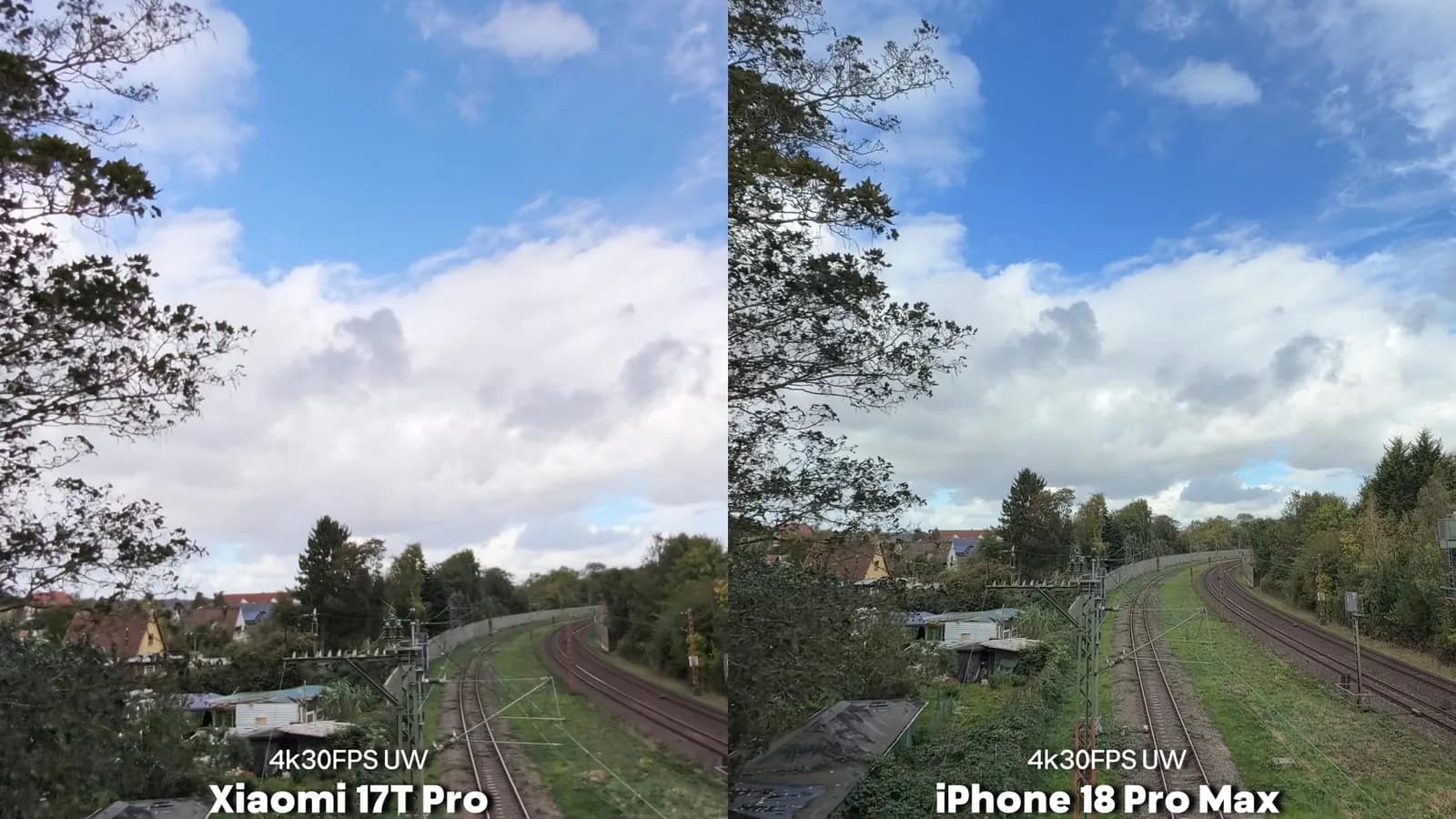
I started with video this time, and the Xiaomi’s ultra wide gave itself away right away. The foliage turns into a watercolor painting, while the iPhone still keeps the individual stones on the ground and the details on the power lines.
4K60 is more limited on the Xiaomi too. It only works with the main lens and the telephoto, and you have to start recording with the lens you want, since switching between them isn’t possible. The ultra wide doesn’t support 4K60 at all, and the front camera is limited to 1080p at 60 fps. For a phone that launched at around €1,000, I expect more than that.
Daylight: Flagship Main Camera
The Leica Vibrant style is definitely more vivid than the iPhone, while Leica Authentic gets much closer in tone. On the ultra wide, though, both Leica styles look blurry next to the slightly too sharp iPhone. I stuck to the default Vibrant mode for the rest of the test.

On the ultra wide, the Xiaomi is too soft and loses detail towards the edges. The iPhone keeps the edges sharp, but over-sharpens and crushes the shadows in the trees. Neither is great, but I’d take the iPhone here.
Then you switch to the main lens, and it’s a massive jump. The Xiaomi is sharp without looking over-processed and keeps far more detail in the trees, which stay too dark on the iPhone. The same goes for 2x, where you can see it in the lettering and the leaves on the road.

On the camera you’ll use the most, the cheaper phone doesn’t just hold its own. It often wins.
Zoom: Depends on the Scene
At 5x vs 4x, the Xiaomi blows out the whites, while the iPhone keeps them under control but over-sharpens again. In the first scene, I’d give 5x and 10x vs 8x to the iPhone by a small margin. In the next scene, the Xiaomi’s 5x looks clearly better.
At 40x, the results flip from scene to scene. Sometimes the iPhone turns into a noisy mess while the Xiaomi stays cleaner, other times the Xiaomi’s heavy processing makes everything look painted and throws the colors off. And 120x? That’s not a photo anymore.

Portraits and Selfies
In Master Portrait mode, the Xiaomi is slightly brighter and more vivid, and at 5x it keeps individual hairs in focus where the iPhone blurs them out. The Leica Portrait mode tones down the saturation noticeably, especially at 2x, where the iPhone looks more natural.

For selfies, the iPhone captures more detail and a wider field of view, while the Xiaomi is warmer. In portrait mode, neither does a great job with background separation, but only the Xiaomi lets you use the wider framing.
Low Light: The Ultra Wide Falls Apart
If the Xiaomi’s ultra wide had issues during the day, it completely falls apart at night. The colors are off and the details are gone. It’s so bad that it makes the iPhone’s not so great ultra wide look superb.

The main lens is a different story. It stays competitive, often handles noise better and keeps lit signs readable where the iPhone blows them out completely. The telephoto, on the other hand, mostly goes to the iPhone at night.

Night portraits and selfies are a clear win for the Xiaomi. The iPhone just can’t keep the noise under control, especially in portrait mode.
Verdict
The Xiaomi 17T Pro has a flagship main camera and an entry level ultra wide. In most situations, I can take a few steps back and use the main camera instead. But you can’t work around a weaker main camera, and that’s exactly where the Xiaomi held its own and even beat the iPhone several times.
With a price difference of almost €1,000, the iPhone should be winning clearly and consistently. Instead, it’s a back and forth. A draw at less than half the price is a win for the Xiaomi.
Watch the full video comparison here:
Xiaomi 17T Pro vs iPhone 18 Pro Max
All photos and videos were taken with the default camera apps, using the Leica Vibrant style on the Xiaomi unless noted otherwise. No Pro mode, no RAW, no manual adjustments.

- Vier brillante Farben. Ein robustes Design – Gemacht, um lange zu halten, mit einem Aluminium Unibody Design und farblic…
- Immersives Pro Display – Ein 6,9″ Super Retina XDR Display1. Heller. Weniger Blendeffekte. Und mit ProMotion bis zu 120 …
- Robuster Ceramic Shield. Auf Vorder- und Rückseite – Gemacht, um lange zu halten. Mit Ceramic Shield auf der Rückseite u…
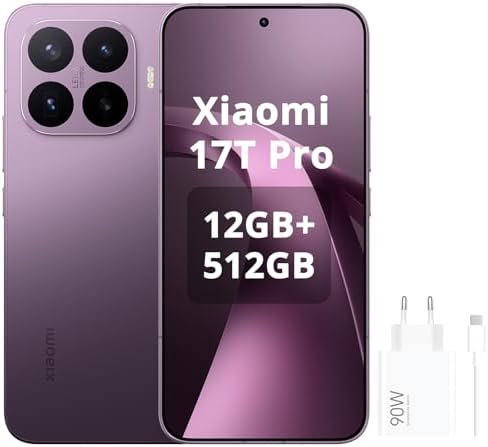
- 【6,83 Zoll 144Hz Eye-Care Display】Extra flüssige Darstellung mit 144Hz Bildwiederholrate, Super Sunlight Display und Wet…
- 【7000mAh Silizium-Kohlenstoff-Akku】 Extrem lange Akkulaufzeit mit hoher Energiedichte. Bis zu 20,3 Stunden kontinuierlic…
- 【Leica 5x Telekamera】 5x nativer optischer Zoom, 10x verlustfreier Zoom in optischer Qualität und bis zu 120x AI Ultra Z…